
 English
 Español
 中文简体
中文简体 Português
If you need any help, please feel free to contact us
Photo Paper 135 Gsm Glossy Thickness and Performance in A4 Format
A4 Glossy Photo Paper and Photo Paper 135 Gsm Glossy are commonly used materials in inkjet printing environments where paper size, thickness, and surface coating work together to influence final output performance. In many practical applications, A4 format combined with 135gsm thickness is widely selected for balanced handling and stable printing behavior.
A4 Glossy Photo Paper is often used in standard printing workflows that require clear visual presentation. Photo Paper 135 Gsm Glossy represents a medium-weight category that is frequently applied in routine inkjet printing tasks across office, educational, and light commercial environments.
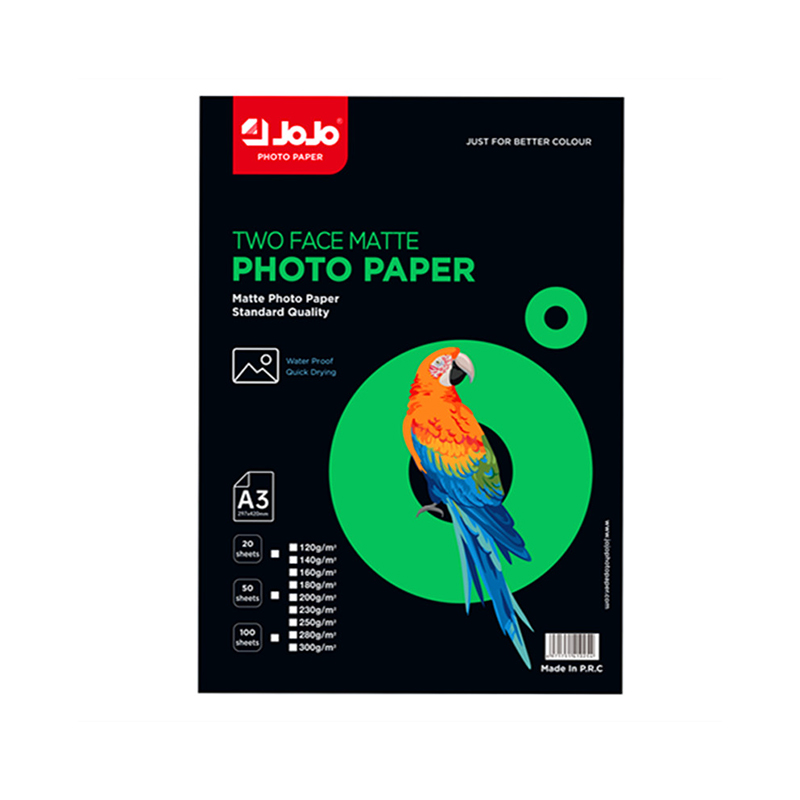
A4 Format Characteristics in Printing Use
The A4 format is one of the most commonly used paper sizes in inkjet printing systems. It provides a standardized dimension that is compatible with most printers and supports a wide range of document and image applications.
A4 Glossy Photo Paper benefits from this standardization by allowing easy integration into daily printing workflows. Photo Paper 135 Gsm Glossy in A4 format is often used for structured printing tasks where consistency and uniform output size are required.
The standardized format also supports efficient storage, distribution, and stacking after printing, which is important in both personal and business environments.
Thickness and Structural Performance
Paper thickness plays an important role in determining handling experience and printing stability. Photo Paper 135 Gsm Glossy is considered a medium-weight option that provides a balance between flexibility and structural support.
A4 Glossy Photo Paper at 135gsm level is generally stable during printer feeding processes. It moves smoothly through inkjet systems under normal conditions, reducing interruptions in continuous printing workflows.
The thickness also contributes to post-print handling stability. Sheets are less likely to curl excessively compared to lighter paper grades, although environmental conditions can still influence final shape.
Ink Absorption and Surface Behavior
The coated surface of A4 Glossy Photo Paper is designed to regulate ink absorption. This helps maintain controlled ink placement and supports clear image formation.
Photo Paper 135 Gsm Glossy uses this coating structure to manage how ink interacts with the paper fibers. Ink remains closer to the surface layer, which supports more defined visual output and reduces uneven spreading.
This controlled absorption also contributes to consistent color presentation across multiple printed sheets, especially in batch printing tasks.
Visual Output and Gloss Effect
Glossy paper surfaces are designed to enhance visual perception through controlled light reflection. A4 Glossy Photo Paper provides a smooth reflective layer that contributes to brighter image appearance.
Photo Paper 135 Gsm Glossy supports this effect by maintaining a stable surface structure that interacts with light in a consistent way. This helps improve perceived image depth and color richness in printed materials.
The gloss effect is particularly noticeable in photographic content and graphic-based printing, where visual clarity is an important requirement.
Practical Usage Across Printing Scenarios
A4 Glossy Photo Paper is widely used in various printing scenarios such as photo printing, presentation materials, promotional graphics, and general inkjet output tasks.
Photo Paper 135 Gsm Glossy is often applied in environments where moderate durability and efficient handling are required. It is suitable for office printing tasks, educational materials, and small-scale commercial printing operations.
Its balance between thickness and flexibility makes it adaptable to multiple usage scenarios without requiring specialized printer settings.
Handling and Storage Considerations
Proper handling is important to maintain surface quality and printing performance. A4 Glossy Photo Paper should be stored in flat conditions to reduce curling and surface deformation.
Photo Paper 135 Gsm Glossy offers moderate structural stability, which helps maintain sheet integrity during storage and handling. However, exposure to moisture, dust, or high humidity can still affect coating performance.
Maintaining stable environmental conditions supports consistent printing results and helps preserve surface quality over time.
Contact Information
- OFFICE 309, GUOMAO PLAZA, NO.999 CHOUZHOU NORTH ROAD, YIWU, CHINA YIWU AOTIAN DIGITAL TECHNOLOGY CO., LTD.
- +86-579-85555923
- jojo001@ywjojo.com
- +86-15214708046
Quick Links
Mobile
Are You Ready To Work With Us?

